
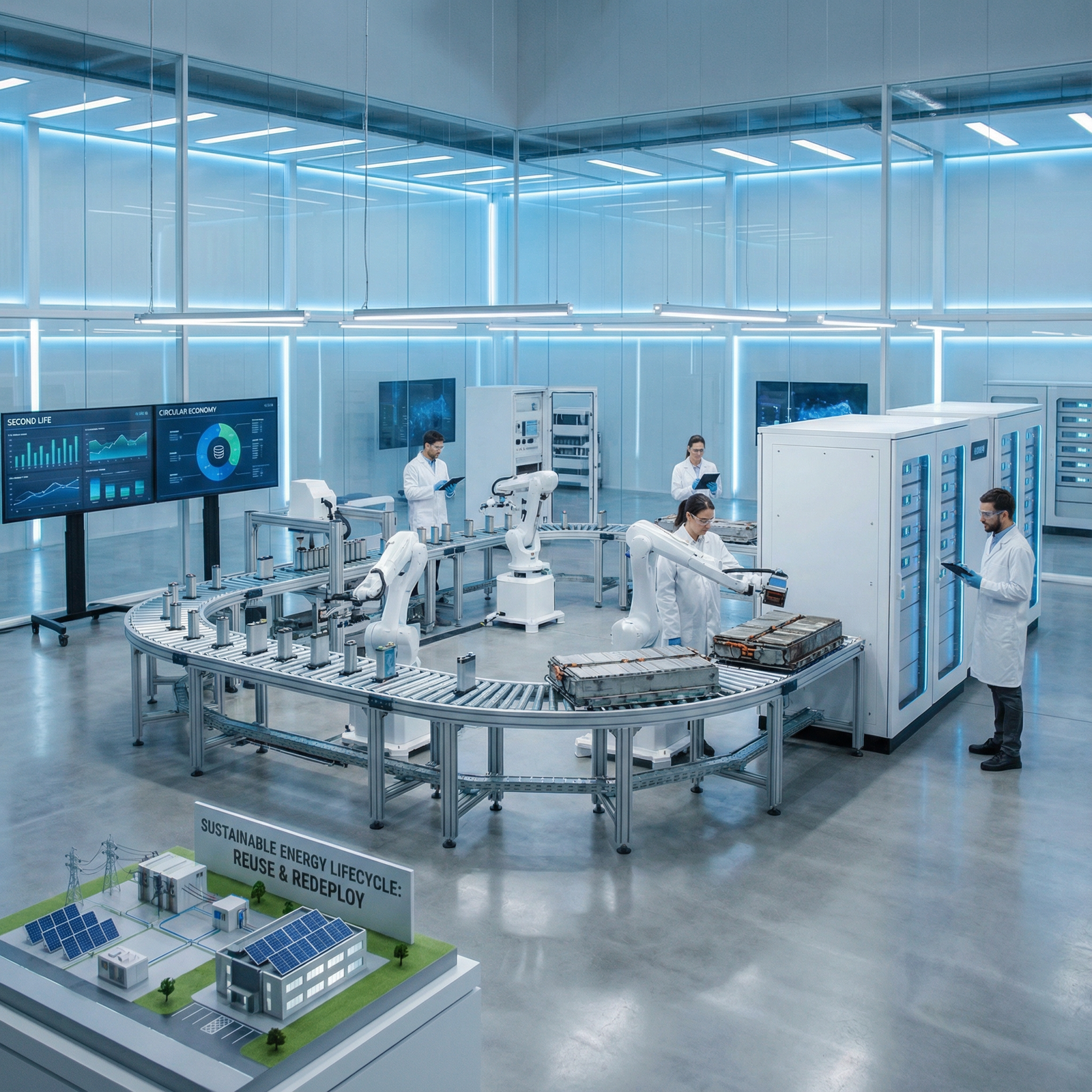
Why Batteries Shouldn’t Die After First Use: The Rise of Second-Life Energy Systems
When most people think about batteries, they imagine a simple lifecycle: manufacture, use, dispose. Once performance drops, the assumption is that the battery is finished.
That assumption is wrong—and increasingly expensive.
Across the energy sector, batteries are being retired not because they’re unusable, but because they no longer meet the strict demands of their first application. Electric vehicles, grid-connected systems, and industrial operations often require peak performance. But when those batteries step down from that role, they still hold tremendous value.
This is where second-life energy systems enter the picture—and why they’re becoming a cornerstone of the circular energy economy.
What Is a “Second-Life” Battery?
A second-life battery is a battery that has completed its initial deployment but is repurposed for a new role instead of being discarded or immediately recycled.
Most lithium-based batteries are retired with 70–80% of their original capacity still intact. While that may no longer be ideal for a vehicle or high-demand grid application, it’s more than enough for many other energy needs.
Second-life systems take these batteries and remanufacture them into new energy assets—extending usable life by years while reducing waste and cost.
Why First-Use Batteries Are Retired Early
Batteries are often removed from service due to performance thresholds, not failure.
Common reasons include:
-
Range or runtime no longer meets original specifications
-
New performance standards or warranties require upgrades
-
Fleet or infrastructure refresh cycles
-
Risk management decisions, not end-of-life events
In other words, batteries don’t “die.” They get reassigned—if the system exists to do so.
The Problem with Skipping Second Life
Without second-life pathways, the energy industry creates unnecessary strain:
Premature waste
Perfectly usable batteries are pushed toward disposal or recycling too early, destroying potential value.
Supply chain pressure
New energy storage demand continues to rise, while materials remain finite and manufacturing lead times increase.
Higher costs
New batteries are capital-intensive. Second-life systems offer a lower-cost alternative for many use cases.
Missed sustainability targets
Organizations aiming for ESG performance lose one of the most impactful levers available: reuse before recycle.
Second-life energy systems solve all four problems at once.
Where Second-Life Batteries Work Best
Second-life energy isn’t about replacing every new battery. It’s about matching the right asset to the right job.
Some of the most effective second-life applications include:
Backup and resilience power
Facilities that need reliable backup—but not constant peak output—can benefit from second-life storage for emergency readiness.
Off-grid and remote power
Remote sites often prioritize durability and cost over maximum density. Second-life systems are ideal here.
Fleet power and charging support
Warehouses, logistics hubs, and fleet depots can use second-life storage to buffer loads and reduce demand charges.
Microgrids and distributed energy
Community microgrids and localized power systems benefit from modular, scalable storage assets.
Temporary and mobile power
Construction sites, events, and disaster response scenarios require fast-deployable energy systems that don’t justify new battery investment.
In each case, the value comes from right-sizing performance to need.
Second Life vs. Recycling: Why Order Matters
Recycling is essential—but timing is everything.
Recycling a battery that still has years of functional life remaining is like melting down a working engine for scrap metal. You recover materials, but you lose far more value than necessary.
A circular energy model follows a smarter sequence:
-
Reuse when possible
-
Remanufacture when needed
-
Recycle only at true end-of-life
This approach:
-
Maximizes economic return
-
Reduces environmental impact
-
Extends material utility
-
Lowers overall system costs
Second-life systems are the bridge between first use and recycling—and the most underutilized part of the loop.
The Role of Remanufacturing
Second-life energy systems aren’t just reused batteries in a box. They require engineering, testing, and design discipline.
Effective remanufacturing includes:
-
Battery health diagnostics and grading
-
Cell and module balancing
-
Safety system upgrades
-
Modular enclosure design
-
Integration with modern power electronics
-
Compliance with deployment standards
When done correctly, second-life systems are reliable, scalable, and purpose-built for their new application—not a compromise.
Why Second-Life Energy Is Scaling Now
Second-life batteries aren’t new—but adoption is accelerating for clear reasons:
Energy demand is rising
Grid stress, electrification, and distributed energy needs continue to grow faster than new infrastructure can be built.
Sustainability is no longer optional
Enterprises and public entities face increasing pressure to reduce waste and document lifecycle responsibility.
Economics are aligning
Second-life systems deliver meaningful cost advantages without sacrificing reliability for the right use cases.
Circular infrastructure is maturing
Logistics, recovery, testing, and redeployment networks are finally scaling to support real deployment volumes.
Second-life energy has moved from concept to infrastructure.
Extending Battery Life Extends Energy Value
Every battery that finds a second life:
-
Reduces landfill pressure
-
Delays raw material extraction
-
Lowers total cost of energy storage
-
Improves return on original investment
-
Strengthens grid resilience
Most importantly, it changes how we think about energy assets—not as consumables, but as long-term value systems.
The Future Belongs to Energy That Gets a Second Chance
As electrification accelerates, the question isn’t whether we’ll deploy more batteries—it’s whether we’ll manage them responsibly.
Second-life energy systems represent a smarter path forward: one where power infrastructure doesn’t stop delivering value after its first assignment.
Batteries shouldn’t die after first use.
They should come back stronger, smarter, and ready for what’s next.