
The Circular Energy Economy: How Power Systems Are Finally Closing the Loop
The energy transition isn’t just about producing cleaner power. It’s about making sure the systems we build today don’t become the waste problem of tomorrow.
For decades, energy infrastructure followed a straight line: extract, build, use, dispose. But that model doesn’t survive modern reality—where demand is rising, supply chains are fragile, and critical materials are too valuable to bury in landfills. The next era of energy is circular: power assets are designed to be recovered, reused, rebuilt, and redeployed.
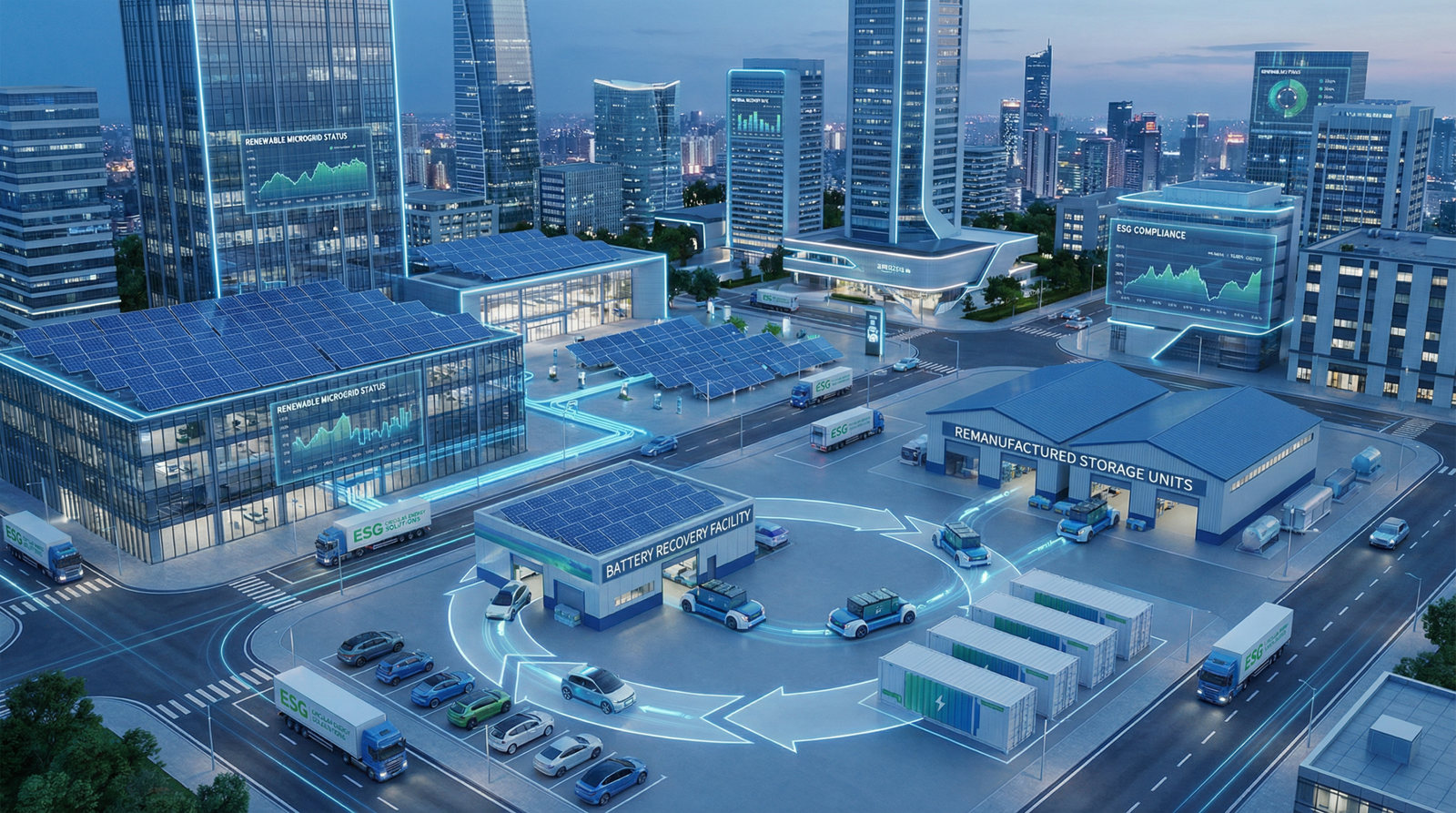
That shift is what the circular energy economy is all about. It’s the move from one-time consumption to continuous value—where batteries, electronics, and energy hardware don’t “end,” they come back.
What “Circular Energy” Actually Means
Circular energy is a simple idea with big implications: energy systems should keep producing value long after their first deployment.
Instead of treating batteries, devices, and hardware as disposable, a circular model treats them as assets with multiple life stages:
-
Use: Batteries and hardware power vehicles, sites, buildings, and grids.
-
Recover: At end-of-use, assets are collected responsibly with documented chain-of-custody.
-
Sort & Evaluate: What can be reused, refurbished, or remanufactured is identified.
-
Redeploy: The asset returns to the market as second-life energy storage or refurbished equipment.
-
Recycle: Only what can’t be reused is processed for material recovery.
This isn’t recycling alone. Recycling is one part of the loop—but circular energy starts earlier, where reuse and redeployment preserve the most value.
Why the Linear Model Breaks Down
The “take-make-waste” model fails in energy for three reasons:
1. Batteries are material-dense and expensive
Battery systems contain high-value materials—some of which face supply constraints, geopolitical risks, and volatile pricing. Throwing that away isn’t just wasteful; it’s financially irrational.
2. Grid demand is rising faster than new infrastructure can be built
Utilities, cities, and enterprises are racing to add resilience: battery energy storage systems (BESS), microgrids, solar + storage, backup power, and peak shaving. But new equipment has lead times, permitting friction, and high capital costs.
3. Disposal risk is real
Improper handling creates environmental risk, compliance risk, and brand risk. Energy hardware needs controlled logistics, responsible processing, and clear reporting.
A circular energy economy solves all three: it captures materials, expands supply through second-life assets, and reduces risk through documented recovery systems.
The Battery’s Second Life: The Most Powerful Part of the Loop
One of the biggest circular breakthroughs is the rise of second-life batteries—especially from EVs and large commercial deployments.
Many batteries are retired not because they’re useless, but because they no longer meet the first application’s performance demands. A fleet might need maximum range. A grid operator might require tight performance thresholds. But those same batteries can still deliver huge value in a “second-life” role, such as:
-
Backup power for remote sites
-
Modular energy storage for off-grid projects
-
Peak shaving and demand response
-
Temporary or mobile energy for construction and logistics
-
Resilience systems for critical facilities
-
Disaster response and rapid deployment power units
Second-life systems are where circular energy becomes practical: you’re turning yesterday’s hardware into tomorrow’s infrastructure.
Recycling Still Matters—and It’s Getting More Strategic
Circular energy doesn’t replace recycling. It upgrades it.
When a battery truly reaches end-of-life, recycling becomes a critical step to recover materials and prevent environmental harm. Modern battery recycling isn’t just “disposal.” It’s a supply chain.
A strong circular model treats recycling as:
-
A compliance solution (regulated handling and documented processing)
-
A material recovery strategy (capturing value, reducing dependence on virgin extraction)
-
A sustainability lever (ESG reporting and landfill diversion)
The key difference is sequencing: reuse first, recycle last. That order preserves the most economic and environmental value.
Circular Energy at Scale Requires a System, Not a Slogan
The biggest misconception about circular life is thinking it’s just a mindset. In reality, it’s a logistics-and-infrastructure problem.
To run circular energy at scale, you need:
Recovery + logistics
Collection and transport of heavy, regulated hardware across regions—without losing chain-of-custody.
Sorting + evaluation
The ability to test, grade, and route assets correctly:
-
refurbish what’s viable
-
remanufacture what’s strategic
-
recycle what’s necessary
Processing + compliance
Secure handling, documented destruction where needed (especially for IT and data-bearing devices), and proof of compliance.
Redeployment pathways
Circular only works when recovered assets can return to market as:
-
refurbished systems
-
modular second-life storage
-
recovered materials feeding new manufacturing
Circular energy isn’t one service. It’s a network.
Who Benefits Most from the Circular Energy Economy
Circular energy creates different kinds of wins depending on the stakeholder:
-
Cities & municipalities get more resilience, better budget efficiency, and measurable landfill diversion.
-
Enterprises reduce risk, improve ESG reporting, and recover value from retired assets.
-
Developers & infrastructure partners gain faster access to storage solutions and scalable deployment pathways.
-
Utilities & grid operators unlock additional supply for storage and resilience without waiting on full new manufacturing cycles.
The common outcome is the same: more uptime, less waste, better economics.
The Future: Energy That Keeps Coming Back
The energy transition is accelerating—but it won’t be sustainable if it produces a new wave of hard-to-manage waste.
The circular energy economy answers the real question behind clean energy:
How do we build systems that don’t end?
When recovery, reuse, second-life, and recycling are treated as one integrated loop, energy stops being a one-time product and becomes a renewable value stream.
That’s the shift: not just cleaner power—but power that keeps coming back.