
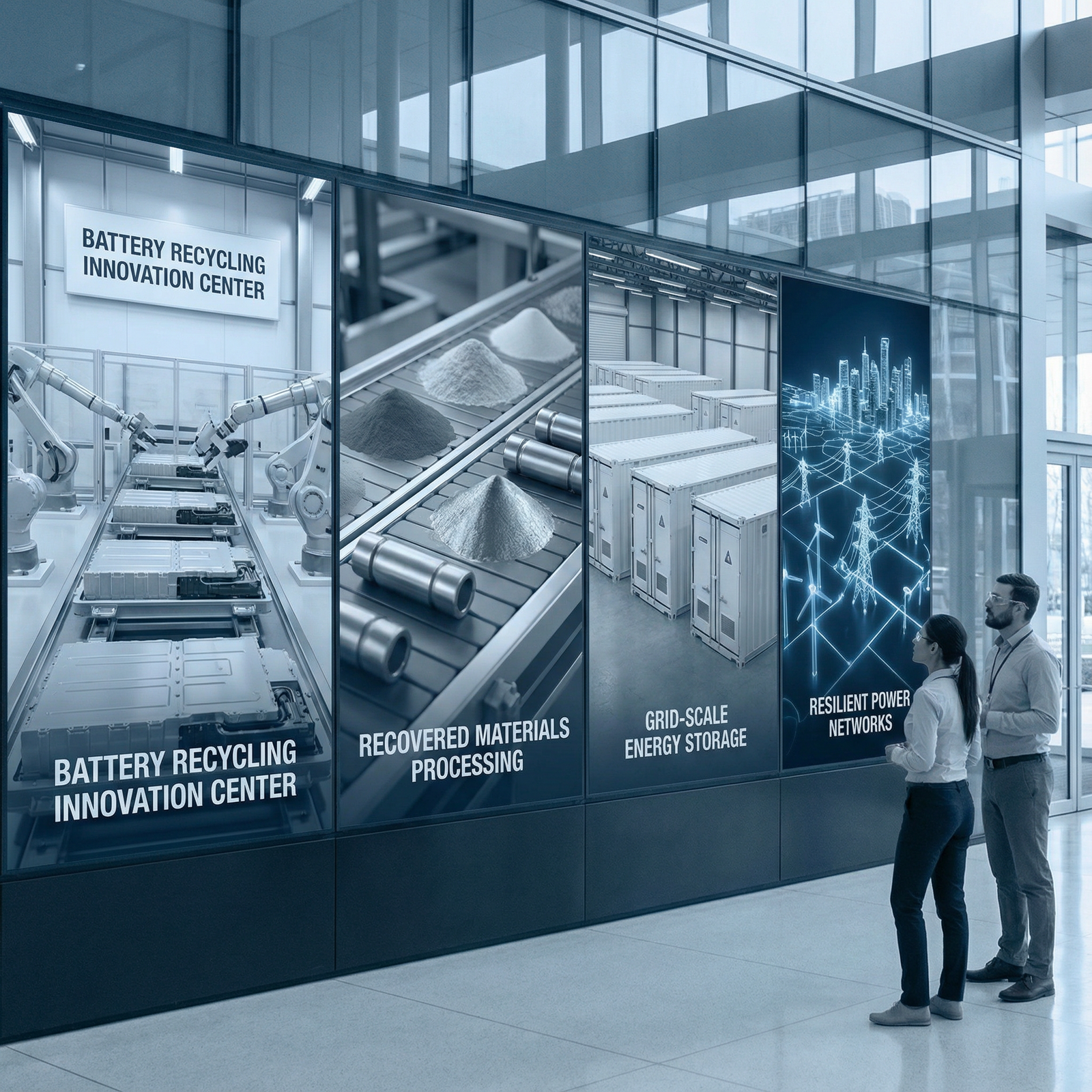
From Landfill to Load: How Battery Recycling Powers the Future Grid
The modern grid is changing faster than ever before. Electrification is accelerating, renewable generation is expanding, and energy storage is becoming essential infrastructure—not a nice-to-have.
But there’s a growing challenge hiding behind that progress: what happens to energy hardware when it’s retired?
Without responsible recovery and recycling, the energy transition risks creating a new waste crisis—one defined by heavy, material-dense batteries and electronics that don’t belong in landfills. Battery recycling is no longer just an environmental obligation. It’s a foundational component of a resilient, circular energy system.
The Problem with Treating Batteries as Waste
Batteries aren’t trash. They’re complex, valuable systems packed with recoverable materials and embedded energy.
When improperly handled, retired batteries create:
-
Environmental risk through hazardous materials
-
Fire and safety hazards in landfills
-
Compliance exposure for organizations
-
Lost material value that could feed future infrastructure
As battery deployment scales across vehicles, grids, fleets, and facilities, disposal-first thinking becomes unsustainable—economically and environmentally.
Battery recycling is how the energy transition closes the loop.
Battery Recycling as Grid Infrastructure
Traditionally, recycling has been viewed as the end of the line. In modern energy systems, it’s part of the supply chain.
Recovered battery materials—such as lithium, nickel, cobalt, copper, aluminum, and graphite—are essential inputs for:
-
New energy storage systems
-
Grid-scale battery deployments
-
Renewable energy integration
-
Backup and resilience infrastructure
Every battery that’s responsibly recycled reduces dependence on raw material extraction and stabilizes supply for future grid projects.
In a circular model, recycling doesn’t remove batteries from the energy economy—it feeds it.
Not All Batteries Should Be Recycled First
An important distinction often gets overlooked: recycling is not always the first or best step.
Many batteries entering recovery streams still have usable capacity. Circular energy systems prioritize:
-
Reuse and second-life deployment where possible
-
Recycling only when assets reach true end-of-life
This sequencing matters because reuse preserves far more value than material recovery alone. Recycling becomes the final safeguard—not the default path.
When recycling is used strategically, it strengthens—not shortens—the lifecycle of energy assets.
What Modern Battery Recycling Actually Looks Like
Battery recycling today is far more advanced than simple shredding or disposal.
A modern recycling process typically includes:
-
Secure collection and transportation
-
Disassembly and sorting by chemistry
-
Mechanical and chemical separation
-
Recovery of usable metals and materials
-
Safe handling of non-recoverable components
The goal isn’t just waste reduction—it’s material recovery at scale, with documented compliance and traceability.
These recovered materials return to manufacturers, energy developers, and storage integrators, creating a closed-loop material flow.
Why Recycling Matters for Grid Resilience
Grid resilience isn’t just about adding more storage—it’s about sustaining the supply chain behind it.
Battery recycling contributes to resilience by:
-
Reducing dependence on volatile raw material markets
-
Shortening supply chains for critical materials
-
Supporting domestic energy infrastructure
-
Enabling faster deployment of storage systems
-
Lowering long-term energy system costs
In other words, recycling helps ensure that energy storage remains available—not constrained—during periods of rapid growth.
Compliance, ESG, and Accountability
Battery recycling isn’t optional for many organizations—it’s regulated.
Enterprises, municipalities, and infrastructure operators face increasing scrutiny around:
-
Proper disposal of hazardous materials
-
Chain-of-custody documentation
-
Environmental reporting and audits
-
ESG disclosures and sustainability targets
A structured recycling and recovery program provides:
-
Proof of responsible handling
-
Clear landfill diversion metrics
-
Auditable reporting
-
Reduced legal and reputational risk
Recycling becomes both a compliance solution and a sustainability asset.
Recycling at Scale Requires Logistics and Coordination
Battery recycling isn’t just a processing challenge—it’s a logistics challenge.
Energy hardware is:
-
Heavy
-
Distributed across sites
-
Subject to transport regulations
-
Often tied to decommissioning schedules
A functional circular system requires:
-
Nationwide collection capabilities
-
Safe transport protocols
-
Coordination between owners, processors, and redeployers
-
Visibility into where assets are and where they go next
Without this infrastructure, even the best recycling technology falls short.
From Recovery to Redeployment
The real power of battery recycling emerges when it’s integrated into a broader circular system.
Recovered materials feed:
-
New battery manufacturing
-
Grid-scale storage projects
-
Renewable energy integration
-
Second-life energy products
Instead of being an endpoint, recycling becomes a bridge between generations of energy infrastructure.
The result is a grid that doesn’t just grow—it regenerates.
Turning Retired Batteries into Grid Opportunity
As energy storage becomes central to how power systems operate, battery recycling shifts from a back-end obligation to a front-line strategy.
It enables:
-
Cleaner energy growth
-
More stable infrastructure planning
-
Reduced environmental impact
-
Smarter use of finite resources
Most importantly, it ensures that the energy transition doesn’t trade one problem for another.
Closing the Loop on Power
The future grid depends on more than generation and storage. It depends on how responsibly we manage what comes after.
Battery recycling is how retired energy assets return to the system—supporting new projects, strengthening resilience, and reducing waste.
From landfill to load, circular energy ensures that power doesn’t stop when equipment is retired.
It comes back—stronger, smarter, and ready to support the next generation of infrastructure.