
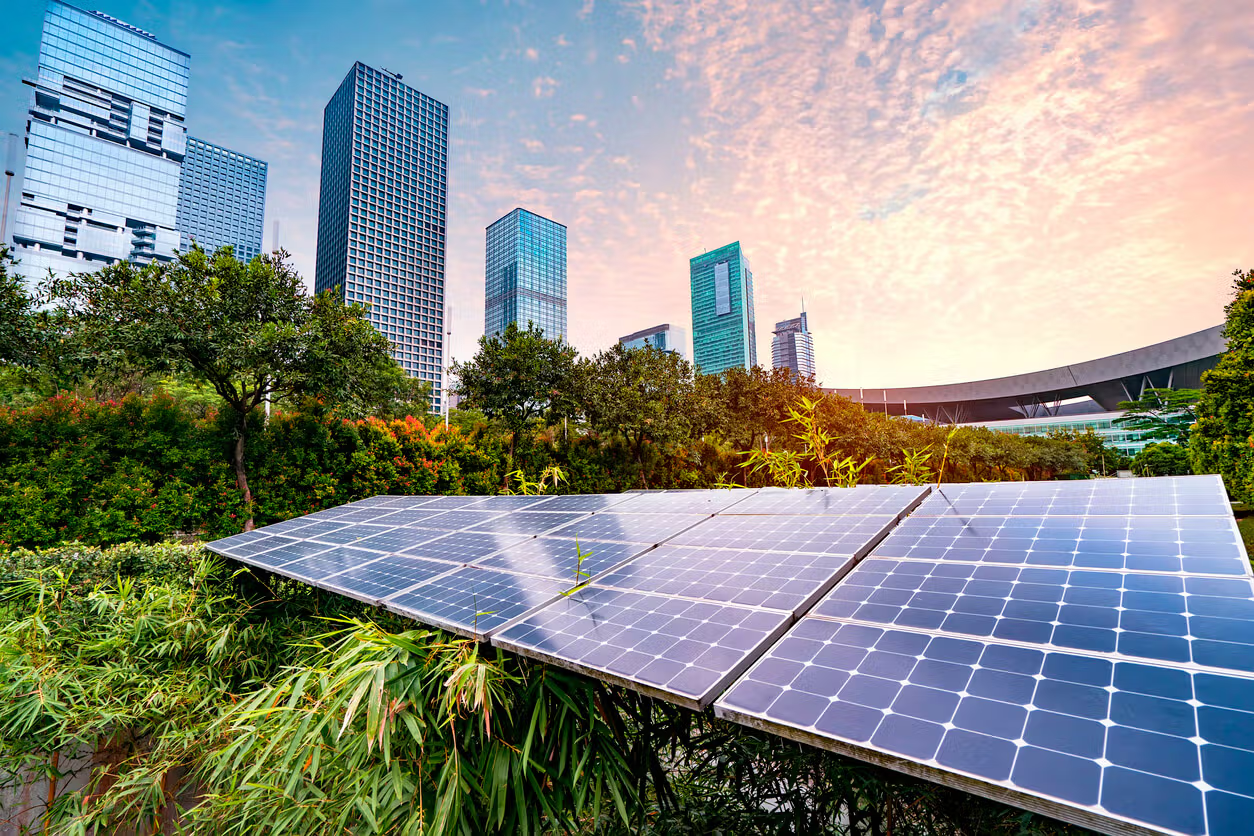
Circular Power for Cities: How Municipal Energy Can Be Cleaner, Cheaper, and Smarter
Cities sit at the center of the energy transition.
They operate critical infrastructure, manage public services, respond to emergencies, and balance tight budgets—all while facing growing pressure to reduce emissions and improve resilience. As electrification accelerates, traditional energy models are no longer enough.
Circular energy offers cities a smarter path forward: one that reduces waste, lowers costs, and builds power systems designed to last.
The Municipal Energy Challenge
Modern cities face a unique set of energy constraints:
-
Rising electricity demand from electrification and population growth
-
Aging grid infrastructure vulnerable to outages
-
Budget pressure limiting large capital investments
-
Sustainability mandates tied to emissions and waste reduction
-
Emergency preparedness requirements for public safety
Building new power infrastructure alone doesn’t solve these challenges. Cities need systems that are resilient, adaptable, and economically sustainable.
This is where circular power changes the equation.
What Circular Power Looks Like at the City Level
Circular power for cities means designing energy systems that continue delivering value beyond their first deployment.
Instead of relying solely on new equipment, cities integrate:
-
Battery energy storage systems (BESS)
-
Microgrids for localized resilience
-
Solar + storage integration
-
Second-life battery systems
-
Responsible recycling and recovery programs
The result is an energy ecosystem where assets are reused, redeployed, and recycled—rather than discarded.
Circular power treats energy hardware as long-term infrastructure, not short-term purchases.
Why Cities Are Ideal for Circular Energy Models
Municipalities are uniquely positioned to benefit from circular systems because of scale and diversity.
Cities manage:
-
Transit fleets
-
Public buildings
-
Emergency response infrastructure
-
Utilities and substations
-
Data, communications, and traffic systems
This creates multiple opportunities to deploy second-life energy systems where peak performance isn’t always required—but reliability is essential.
By matching recovered energy assets to the right municipal use cases, cities can stretch budgets while improving service reliability.
Lowering Costs Without Sacrificing Reliability
One of the biggest misconceptions about circular energy is that it requires compromise. In reality, it often improves financial outcomes.
Second-life energy systems and refurbished infrastructure:
-
Reduce upfront capital costs
-
Shorten deployment timelines
-
Extend asset lifecycles
-
Lower total cost of ownership
For cities operating under fixed budgets, these savings can be redirected toward expanded coverage, additional resilience projects, or other public services.
Circular energy doesn’t replace new infrastructure—it complements it strategically.
Building Resilience Where It Matters Most
Power outages don’t just inconvenience cities—they disrupt essential services.
Circular energy enables:
-
Microgrids that isolate during outages
-
Backup power for emergency services
-
Energy continuity for water, communications, and traffic systems
-
Rapid deployment of mobile power during disasters
Because second-life and modular systems can be deployed faster than traditional builds, cities gain flexibility during both planned upgrades and emergency scenarios.
Resilience becomes proactive, not reactive.
Sustainability That Goes Beyond Generation
Many municipal sustainability plans focus heavily on renewable generation—but generation is only part of the equation.
Circular power addresses the full lifecycle of energy assets by:
-
Reducing landfill-bound hardware
-
Extending battery life through reuse
-
Recovering materials through responsible recycling
-
Providing measurable ESG and sustainability metrics
This allows cities to demonstrate leadership not just in clean energy, but in responsible infrastructure management.
Circular Energy and Smart City Strategy
Smart cities rely on distributed systems, data, and adaptability. Circular power aligns naturally with this approach.
Integrated energy systems can support:
-
Smart traffic and lighting infrastructure
-
EV charging for municipal fleets
-
Grid-interactive buildings
-
Demand response and peak shaving
-
Distributed storage supporting renewable integration
Circular power turns energy from a fixed cost into a flexible asset within a smart city ecosystem.
Managing Risk Through Responsible Recovery
Cities also face risk when decommissioning old energy hardware.
Improper handling can lead to:
-
Environmental violations
-
Safety hazards
-
Compliance failures
-
Public trust issues
Circular energy systems include structured recovery, logistics, and recycling processes—ensuring that retired assets are handled responsibly and transparently.
This protects both the city and the communities it serves.
A Smarter Path Forward for Municipal Power
Circular energy allows cities to move faster without cutting corners.
By combining new infrastructure with second-life systems and responsible recycling, municipalities gain:
-
Greater resilience
-
Better budget efficiency
-
Reduced waste
-
Improved sustainability reporting
-
Long-term infrastructure flexibility
It’s not about doing more with less—it’s about doing more with what already exists.
Cities That Build Circular Power Build the Future
As energy systems grow more complex, cities need solutions that scale responsibly.
Circular power ensures that today’s investments don’t become tomorrow’s liabilities. It transforms retired energy assets into tools for resilience, sustainability, and smart growth.
For cities, the future of energy isn’t just renewable.
It’s circular, adaptive, and built to serve communities for the long run.